Ideas are new, at least to the person having it. While opinions bring to boil factors other than pure discovery. Ideas shape us, we shape ideas. Opinions sometimes become a parroting of facts to inform a conversation. Opinions make us confident; ideas make us creative. Thinking in ideas involves thinking positively. Thinking in opinions involve debating while thinking. Nothing wrong with debating – its important for critical thinking. But thinking can be so much more. We think to expand our understanding of the world around us. We think to form opinions and proceed accordingly. Sometimes these opinions could be trashy and negative. Ideas most often are constructive, even when flawed. Thinking in ideas makes us appreciate the agency we have in this world.
Living with agency is what living deliberately means. Taking control of what we pay attention to and why is becoming more and more important as the avenues to fritter away attention continues to expand in all directions. What then would you use as the mental model to drive your attention towards? You may not realize it, but this conscious attention will become intrinsic to our choices in the modern world primarily because each object will scream for attention as they become more evolved and advanced (think Human Computer Interaction).
Almost everyone is attention deficit today, and that’s why revenge bedtime procrastination is a thing. Our mind wanders because we have the space for it to wander and drift. But creativity and ideas don’t just emerge in this vast realm, they are surfaced through constraints. Within the bounded spaces of a real or otherwise constraints, we can imagine a different reality and believe in it. Like economists do with their research. Some of these ideas may not scale outside the constructs you have laid out, but that’s okay and they don’t need to if you can replicate these constraints elsewhere. Like monopolies.
I wonder often how our thinking and our approach towards life came to be dominated with commerce and the paradigms around it. Commerce is an exchange of value between people. It should stop at that, but commerce has become the engine of innovation and of progress. Commerce is not intrinsically linked to our well-being and our sense of moral obligation in this world. Commerce has insidiously invited itself over to the party of human affairs and human condition when it should have merely been the caterer. How did we come to this state of being and what does that tell us about where it might be leading us? I don’t have an answer to this, but I strongly feel that the answer is not following the logic of commerce in a straight line. Nor is it shunning it altogether because that just would lead to a spiraling decline in our state of being. Till the time we figure out the alternate, we have no choice but to follow-through with the demands and the eccentricities of commerce. But, on an atomic, individual level, our responses could be more nuanced. We can, consciously, choose not to hold commerce to a higher regard than some of the other things we find morality in on this world. While continuing to follow the gravel path laid down by it, we can avoid the pitstops and the minimum speed guidelines that is defaulted into our consciousness before we even begin this journey.
Daniel Kahneman talks about this at length – how our hidden assumptions and biases come to dominate our ways of thinking, restrict our progress, and hinder our peace of mind, without us realizing it. These hidden beliefs and assumptions are pure evil for they lead us to believe in their inoculated, harmless nature, while in fact they are working behind our backs to roadblock our movements and our goal-seeking behaviors. As with meditation though – where when your mind wanders, its only natural and you must strive to bring it back – the biases we inherit or seed into our lives will always be there but with agency and conscious recognition, we can do something about it. Our biases are not solely with respect to others, as has been the common cause of the vox populi evident in the neuroscience books of yore (Hidden Brain, Thinking Fast and Slow…) but they affect how we perceive us and our own goals and aspirations too. Too often, caught in the whirlpool of our own pathos and the intricate machinery of the commerce systems, we lose our sense of identity to the collective and blindly follow through the path laid down and well worn by the billions that preceded before us. Nothing wrong with it per say, and try as you might, you will never carve out a separate path anyways. But at the least, with agency and with attention, you can be aware of it, and institute changes in your life that lets you enjoy it even.
And that’s where ideas come in. Ideas let you steal away moments from your journey where you can hypothesize journeys and roads different from the one you have taken. Actively testing your ideas lead you to experiments that either a) go nowhere, b) help you steal a march over your goals, and c) lead you to a fuller understanding of yourself. The path and the process of innovation is first through the dense forest of creativity which in turn is sprouted through the ideas and experiments that germinate in your consciousness. By actively considering experiments across the different facets of your life viz. career, relationships, hobbies, health, personality, etc. you let lose a volley of unpredictable detours in your path that enriches the journey and keeps your motivation from sinking into the mores of the pre-determined, large, and uncaring world of commerce.
I am guessing these experiments can bring unintended benefits too, those that willy-nilly carve out a mental model for us to approach the challenges and decisions in our lives through a two-way door. That may be good or bad, depending on the context, but at least you will rest securely in the knowledge that you have more willpower than you think you do.
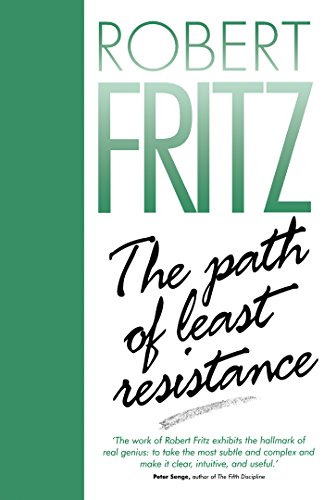
Inspired by:
 Jargogled Impressions.
Leave a comment