The trouble with multiple narrators in a fictional work is that it ends up prioritizing the macro over the micro. The common themes that run across these narratives become a backdrop with which you view each of these stories, risking the individuality of the characters. The intent here of course being to provide a disjointed snapshot of a specific time, place, epoch, or emotion.
I read two books recently each dealing with its own theme via the structure of multiple narrators. “Redeployment” focuses on the lives and times of US soldiers deployed for combat operations, administrative offices, body handling, and artillery in Iraq and Afghanistan while “In our Mad and Furious City” draws us closer to a ghetto in London dealing with the fractured social appendages in an age after 9/11.
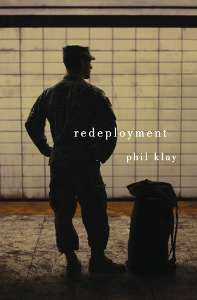 In Redeployment, Phil Klay brings to light the inner voices of young men deployed (and redeployed) to frontier operations in middle east and the havoc it wreaks in their personal lives. An artilleryman questioning the aftermath of his first “kill”, an infantryman confronts the collateral damage from his actions, an administrative officer contemplating the mental health of soldiers who seek his help. The stories are co-joined not only because they speak of war and its impact on the psyche of these young men, but also of the fact that much of what happens during and after is random, episodic and nary a reason. The moral and ethical dilemmas during the war is presented in clear and unobstructed view with snapshots of its evident imprint in the lives it touches.
War stories are usually told through the eyes of the oppressed, the defeated, or the impacted. These men of action – sent to these foreign lands with a foreign tongue – are more than just mercenaries following orders. Brothers in arms, these soldiers often are closer to their counterparts than with their spouses or family. A shared trauma, an IED blast, a common enemy, a common friend lost on the trenches, a life forsaken – the strands these stories weave become stronger and more kneaded than is commonly assumed, and therein lies the novelty of this book from Klay.
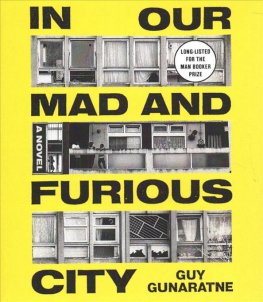 “In our mad and furious city” is an aggressive debut. The author’s adoption of the local tongue in a poor corner of London reminds me of the tools that George Saunders uses in his short stories via the power of authentic dialect.
Again, the set of narrators – residents of a neighborhood within London called “The Estate” – are cast in a kaleidoscopic image of hope, ambition, despair, and self-actualization. The thread that weaves them together isn’t just the city itself, but the inner voices or dreams of these characters. The city of London is offered up as a mirror to the million small instances of racism, oppression, segregation and ghettoization that dominates the society we live in today. Nationalism, in its many avatars, has roared back to life around the world in a post 9/11 world. Driven by an inherent need for familiarity and safety, the nationalistic fervor have climbed steadily with the perceived majority (“silent”), feeling threatened and cornered, retaliating against economic / political immigration through the heavy hand of racism.
In our mad… is a definitive image of this society in motion. It’s this struggle of first and second-generation immigrants, of men driven in various parts by their dreams, ambitions, terror, and religion, of youngsters roiled by the apathy of a city constantly bending to the powerful and the moneyed. In some respects, I found myself recalling the images from Adiga’s The White Tiger and its despotic manifestations of a society rife with inequality and exploitation, of a gritty and despondent world where reason and hopes are crushed by the rolling boulders of passion, jingoism, parochialism and of mob realism.

 Jargogled Impressions.
Leave a comment